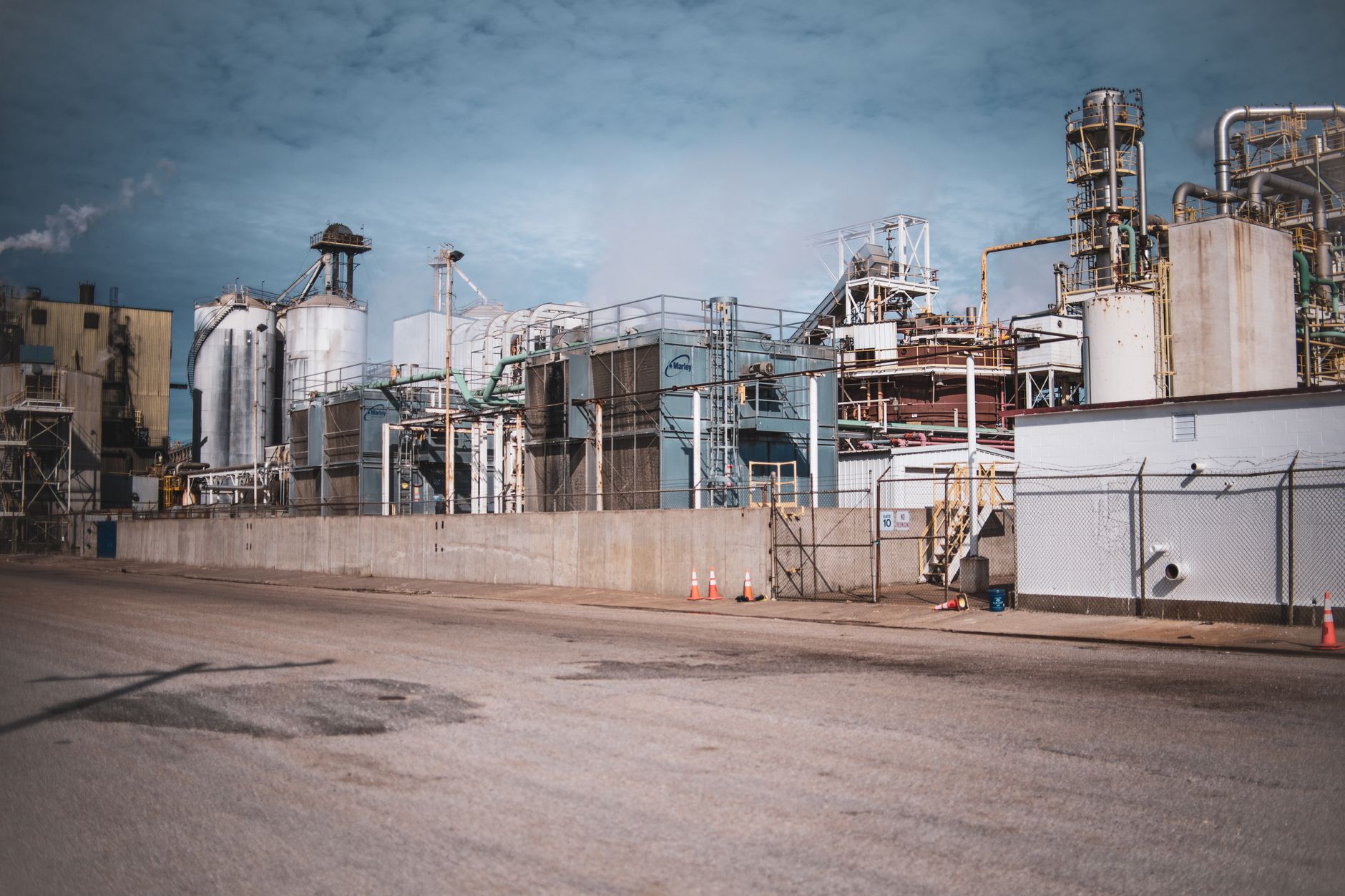
About FirstEnergy Sammis Plant Stratton Ohio
The Facility: Location, Operations, and Ownership
The W.H. Sammis Plant is a coal-fired electric generating station on the Ohio River in Stratton, Jefferson County, Ohio, near the Ohio-West Virginia border. Construction began in the 1950s. The first generating units came online in 1959. The facility expanded through the 1960s, eventually encompassing seven large coal-fired boiler units—making it one of the largest power generation facilities in the Ohio River corridor.
Ohio Edison Company originally built and operated the plant. Ohio Edison eventually became part of FirstEnergy Corporation, headquartered in Akron, Ohio. FirstEnergy announced the plant’s retirement as part of broader changes to its generating portfolio, but the facility’s operational history—spanning the late 1950s through recent decades—means workers employed during virtually any phase may have encountered asbestos-containing materials.
Key facility facts:
- Named after W.H. Sammis, a former president of Ohio Edison
- Located in Jefferson County, a region with deep roots in industrial manufacturing, mining, and steelmaking
- Employed thousands of workers directly and through contractors and maintenance trades
- Operated continuously from 1959 through announced retirement
- Sits in an industrial corridor where many workers held jobs at multiple heavy industrial facilities, including steel mills, chemical plants, and other power stations along the Ohio River Valley
Asbestos Exposure Ohio: The Regional Industrial Context
The Sammis Plant did not exist in isolation. Workers employed in this region often had careers that spanned multiple Ohio industrial facilities—all of which shared the same asbestos-containing product supply chains and the same culture of underreporting occupational hazard.
Cuyahoga County asbestos lawsuit activity and litigation throughout Ohio reveals a consistent pattern: skilled tradespeople and laborers built and maintained multiple heavy industrial facilities during their working lives. Workers who labored at the Sammis Plant may also have worked at other major Ohio facilities known to have reportedly used asbestos-containing materials, including:
- Cleveland-Cliffs Steel (Cleveland and surrounding facilities)
- Republic Steel in Youngstown
- Goodyear Tire & Rubber in Akron
- B.F. Goodrich in Akron
- Ford Motor Company’s Lorain Assembly Plant
This pattern of multi-site Ohio industrial employment is directly relevant to building a comprehensive asbestos lawsuit Ohio claim: each additional facility where exposure may have occurred potentially represents an additional defendant, an additional asbestos trust fund Ohio claim, or both.
Time is critical: Because Ohio’s two-year filing deadline runs from diagnosis, a worker with a long multi-site career faces the same hard deadline as anyone else. The complexity of documenting exposure across multiple facilities is not a reason to delay — it is a reason to contact an asbestos attorney Ohio immediately so that documentation can begin before the deadline passes.
Why Coal-Fired Power Plants Required Asbestos-Containing Materials
Coal-fired power plants operated under extreme thermal and pressure conditions. Steam was generated at pressures exceeding 2,000 pounds per square inch and temperatures well above 1,000 degrees Fahrenheit. For much of the twentieth century, asbestos—a naturally occurring silicate mineral with extraordinary heat resistance, tensile strength, and chemical stability—was considered indispensable for these applications.
Manufacturers incorporated asbestos-containing materials into hundreds of products specified for power plant construction.
Insulation and Protective Systems:
- Pipe insulation and block insulation on steam lines, feedwater lines, and condensate return lines (reportedly supplied by Corporation and , both major Ohio-connected suppliers)
- Boiler insulation wrapping the massive boiler units
- Turbine insulation protecting high-pressure and low-pressure turbine casings
- Insulating blankets and block on boiler fronts and auxiliary equipment
Sealing and Containment Materials:
- Gaskets at pipe flanges, valve bonnets, and heat exchanger connections (reportedly manufactured by gaskets and packing)
- Packing materials in valve stems and pump seals
- Refractory cements and castables inside boiler fireboxes and furnace walls (reportedly supplied by )
- Insulating cements applied as finishing coats over pipe insulation
Building Systems and Equipment:
- Electrical insulation in panels, wire jacketing, and arc-resistant components
- Floor tiles and adhesives in control rooms and equipment buildings (reportedly Gold Bond and brand products)
- Roofing materials on plant structures
- Friction materials in industrial brakes and clutches
Asbestos Product Manufacturers Whose Products Workers May Have Encountered
- Corporation**—reportedly supplied calcium silicate pipe insulation and thermal insulation block products to power plants throughout the Ohio River Valley
- and —headquartered in Toledo, Ohio; reportedly supplied pipe covering and insulation block systems to power generation facilities throughout the state
- —reportedly supplied refractory materials and boiler-related asbestos-containing products to coal-fired plants in Ohio and throughout the region
- gaskets and packing—reportedly supplied asbestos-containing gasket materials for flanged connections throughout the plant
- —reportedly supplied floor tiles, roofing materials, and gasket products containing asbestos
- —reportedly supplied specialty insulation and sealant products to industrial power plants
- —reportedly supplied insulation products used in steam system applications
- ceiling tile Corporation—reportedly supplied pipe insulation and thermal barrier products
- —reportedly supplied valves and fittings with asbestos-containing gaskets and packing
- —reportedly supplied insulation and protective materials to large industrial facilities in the Ohio River Valley region
The Ohio River Valley was a primary distribution corridor for asbestos-containing building and industrial materials throughout the mid-twentieth century. Construction and long-term maintenance of a facility the size of the Sammis Plant required enormous quantities of these materials, applied and worked by hundreds of tradespeople over many years.
Many of the manufacturers listed above subsequently filed for bankruptcy due to asbestos liability and established asbestos bankruptcy trusts to compensate victims. Those trusts are paying claims right now — but trust fund assets are finite and depleting with every passing month. Ohio workers and their families who delay filing trust claims risk recovering less or, in some cases, finding that trust assets have been exhausted. An experienced asbestos attorney Ohio can identify every trust your diagnosis may entitle you to claim against and file those claims simultaneously with your civil lawsuit.
Skilled Trades and Union Workers: High-Exposure Occupations
The Sammis Plant employed thousands of Ohio workers directly as utility employees. A steady stream of contractors, subcontractors, and maintenance tradespeople cycled through the facility during construction, overhauls, and ongoing operations.
Ohio union locals whose members reportedly worked at the Sammis Plant and comparable eastern Ohio power facilities include:
- Boilermakers Local 900 (based in the greater Ohio industrial region)—members who performed boiler maintenance, tube replacements, and outage work were among those working in the closest proximity to deteriorated asbestos-containing insulation and refractory materials
- Heat and Frost Insulators Local 3 (Cleveland) and Asbestos Workers Local 3 (Cleveland)—insulators who traveled to eastern Ohio job sites, including the Sammis Plant, for installation and maintenance work
- United Steelworkers (USW) Local 1307 (Lorain)—members whose careers spanned both steel production and industrial maintenance work, some of whom may have worked contractor jobs at power facilities including the Sammis Plant
- Plumbers and Pipefitters UA Local 120—reportedly supplied skilled tradespeople to the Sammis Plant and comparable facilities throughout the eastern Ohio and Ohio River Valley region
This pattern of multi-site union employment matters both medically and legally. Workers may have accumulated asbestos exposures across numerous industrial facilities throughout their careers. That means multiple potential defendants—not just one—and potentially multiple asbestos trust fund Ohio claims.
Wrongful Death Claims for Family Members
If you are a surviving family member of a union tradesperson who worked at the Sammis Plant and has since died of mesothelioma or another asbestos-related disease, Ohio law may allow you to pursue a wrongful death claim on behalf of your family. That claim is also subject to Ohio’s two-year deadline — measured from the date of death. Contact an Ohio asbestos statute of limitations specialist to confirm your deadline before it passes.
Geographic Origin of the Workforce: Multi-Site Industrial Careers
Jefferson County and surrounding eastern Ohio have deep roots in the industrial economy. Workers often held jobs not only at the Sammis Plant but at other heavy industrial facilities throughout the Ohio River Valley, including Cleveland-Cliffs Steel and Republic Steel in Youngstown to the north, as well as comparable coal-fired power plants in Kentucky, West Virginia, and Pennsylvania.
Attributing exposure to specific facilities requires careful documentation of work history — but multi-site careers typically strengthen a legal claim by identifying additional defendants and additional trust fund claims.
That documentation process takes time. Employment records age, witnesses become unavailable, and union records grow harder to locate with each passing year. The sooner you contact an Ohio mesothelioma lawyer after your diagnosis, the better your attorney’s ability to reconstruct the full history of your occupational exposure — and the less risk you face of losing critical evidence to the passage of time.
General Equipment at FirstEnergy Sammis Plant Stratton Ohio
The equipment below represents the systems and infrastructure documented or typically present at this facility during the era when asbestos-containing materials were specified in industrial construction. This is general facility-equipment reference — not a legal attribution of any specific product, manufacturer, or exposure event to this facility. Material-category and manufacturer information is addressed in the AsbestosIndex Product Crosswalk linked under the records table below.
Documented Asbestos Evidence — Ohio
The records below are verified, state-documented asbestos removals at this facility. Each entry represents a regulated abatement project where the Ohio Environmental Protection Agency (Ohio EPA) was notified under federal NESHAP rules, the work was logged, and the asbestos-containing material was confirmed and removed under regulated conditions. These are not allegations or estimates — they are paper records tying documented asbestos-containing material to this specific site.
No Ohio EPA NESHAP abatement notifications have been identified for this facility in current public records. Per the framing above, absence of state-agency documentation should not be read as absence of asbestos — only as absence of a formal, regulated abatement event meeting reporting thresholds. Workers who recall encountering pipe insulation, block insulation, gaskets, or other asbestos-era construction materials at this facility may still have viable claims regardless of whether a state record exists.
Material Categories in Documented Records
The materials documented above (and similar asbestos-containing materials commonly encountered in records of this type) appear in the AsbestosIndex catalog with historical manufacturer and trust-fund information. Click a category to view manufacturers historically associated with that material:
Ohio — Filing Deadline & Next Steps
Ohio law gives mesothelioma and asbestos-disease claimants 2 years from the date of medical diagnosis to file a personal-injury lawsuit (ORC § 2305.10). For wrongful-death claims after an asbestos-related death, the filing window is 2 years from the date of death (ORC § 2125.02). The two deadlines run on separate tracks — preserving one does not extend the other.
The personal-injury clock runs from diagnosis, not from exposure. Mesothelioma latency is typically 20 to 50 years, so workers exposed in the 1950s–1980s are being diagnosed today.
Practical first steps
- Document what you remember. Pay stubs, W-2s, union cards, photographs, coworker names, and dates of employment. The WorkChain widget on this page can save a copy you can email yourself.
- Preserve medical records. Pathology reports, biopsy results, imaging, and pulmonary-function tests are central to both civil claims and trust-fund filings.
- Identify household members. Spouses who laundered work clothing and children of plant workers are eligible for secondary-exposure claims when diagnosed with an asbestos-related disease.
- Speak with an asbestos attorney with Ohio experience. The first conversation is free and confidential. Asbestos trust-fund claims and civil claims run on different tracks — both can be pursued in parallel.
Asbestos-Related Diseases — Ohio
Asbestos fiber exposure can cause several specific diseases that typically appear decades after the original exposure. The latency period — the gap between exposure and diagnosis — usually runs 20 to 50 years. That's why workers exposed in the 1960s, 1970s, and 1980s are receiving diagnoses today.
Mesothelioma
A rare, aggressive cancer that affects the lining of the lungs (pleural mesothelioma), abdomen (peritoneal), or heart (pericardial). Mesothelioma is almost exclusively caused by asbestos exposure, which is why a mesothelioma diagnosis often points directly to historical workplace exposure. Average latency from first exposure to diagnosis is 30-50 years.
Asbestosis
A chronic, non-cancerous scarring of lung tissue caused by inhaled asbestos fibers. Asbestosis causes progressive shortness of breath, persistent cough, and reduced lung function. It does not improve with treatment, and it is a recognized basis for a claim under most trust schedules and civil claims.
Lung Cancer
Asbestos exposure significantly increases the risk of lung cancer, particularly when combined with a history of smoking. Asbestos-related lung cancer is compensable under the same trust schedules and civil claim avenues as mesothelioma.
Other Recognized Diseases
Pleural plaques, pleural thickening, laryngeal cancer, ovarian cancer, and certain gastrointestinal cancers are also recognized as asbestos-related under various trust schedules and case-law authorities, though eligibility and proof requirements vary by claim type.
If you have any of these diagnoses and you worked at this facility, lived with someone who did, or were exposed in any documented capacity, you may have a claim worth pursuing. Speak with an attorney before assuming you don't qualify.
Data Sources — Ohio
Information about facility equipment, industrial materials, and occupational records referenced on this page is drawn from publicly available sources where applicable, including:
- EPA ECHO Facility Compliance Database — enforcement and compliance records for industrial facilities
- OSHA Establishment Search — federal workplace inspection history
- EIA Form 860 Plant Data — power-plant equipment and ownership records (where applicable)
- Ohio Environmental Protection Agency NESHAP asbestos abatement notification records
- Published asbestos trial and trust fund records (publicly filed court documents)
- AsbestosIndex Product & Manufacturer Crosswalk — historical asbestos-containing product schedules linked to manufacturers
If specific equipment or product claims in this article are sourced from a non-public database, the source is identified parenthetically within the text above.